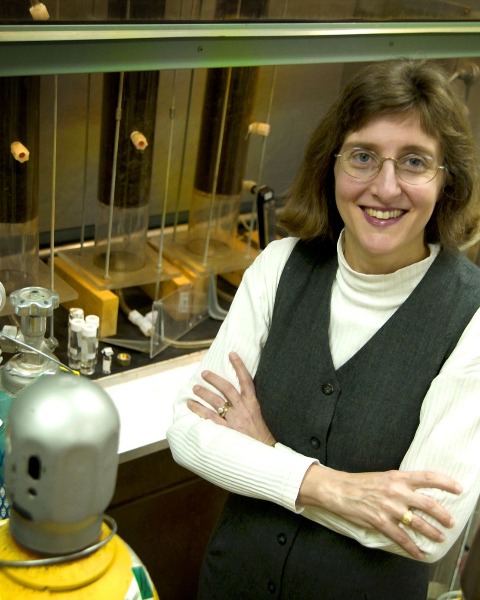
Professor The University of Texas at Arlington, TX
Abstract Description: The pressing environmental and hygiene problems caused by solid wastes in developing countries can be significantly mitigated through the adoption of environmentally friendly technologies for waste treatment and disposal. Decision-support tools for selecting solid-waste management processes in developed countries exist already; however, developing country municipalities are facing problems for effective and efficient municipal solid waste management (SWM). Decision support tools for developed countries do not apply well directly to developing countries, due to differences in default values and assumptions like, type of equipment and waste, fraction of waste going to processing facilities, etc. Hence, there is an urgent need to develop decision support tools tailored for developing countries. These tools will be helpful to municipal officers, consultants, stakeholders, manufacturers, academicians, and others in making decisions. A decision support tool’s Collection & Transportation (C&T) process module was developed using a lifecycle approach to estimate the cost, diesel consumption, and greenhouse gas emissions (GHG) associated with municipal solid waste collection and transportation, which is the most fuel-intensive and often the highest budgetary item for municipalities for sustainable solid waste management. The module divides collection service areas into single-family residential, multi-family residential, and commercial sectors with sector-specific, user-defined characteristics, including population, waste generation rate, and waste composition. Waste is collected in various categories (e.g., residual waste, recyclables) with associated costs, energy use, and GHG emissions. The data for the process module were collected from the State of Gujarat in western India. Two case studies (of urban cities with population of 300-400 thousand, Vapi Municipality (VM) and 5.5-6.5 Million, Ahmedabad Municipal Corporation (AMC)) were developed that represent the first applications of an assessment tool using life-cycle assessment for SWM. The total capital cost for C&T module for AMC was found to have a 9 % lower capital cost per ton as compared to VM, while total operating and maintenance costs were found to be 5% greater for the VM as compared to AMC. For AMC the O&M cost was found to be 7.5 times the capital cost, while for VM it was found to be 6.28 times. The C&T in AMC consumes 80 % of the total diesel used for overall solid waste management and 35 % in VM. The optimization results indicated that diverting waste from open dumping to a regional landfill reduced GHG emissions (by 51% for AMC, in conjunction with diversion to vermi-composting, and 44% for VM); diverting waste from vermi-compost facilities to open dumps reduced costs (by 29% for AMC, and 18% for VM), and diverting waste from the regional landfill (for AMC) or open dumps (for VM) to vermi-compost facilities reduced diesel consumption (by 4% for AMC and 10% for VM), when compared with the current scenario, based on primary data collected from municipalities. Sensitivity analysis illustrated the relative impact of changing individual parameters (waste tonnage, % diversion to different facilitates; vermicomposting, regional landfill, etc.) on the cost, diesel consumption, and GHG emissions.


.jpg)